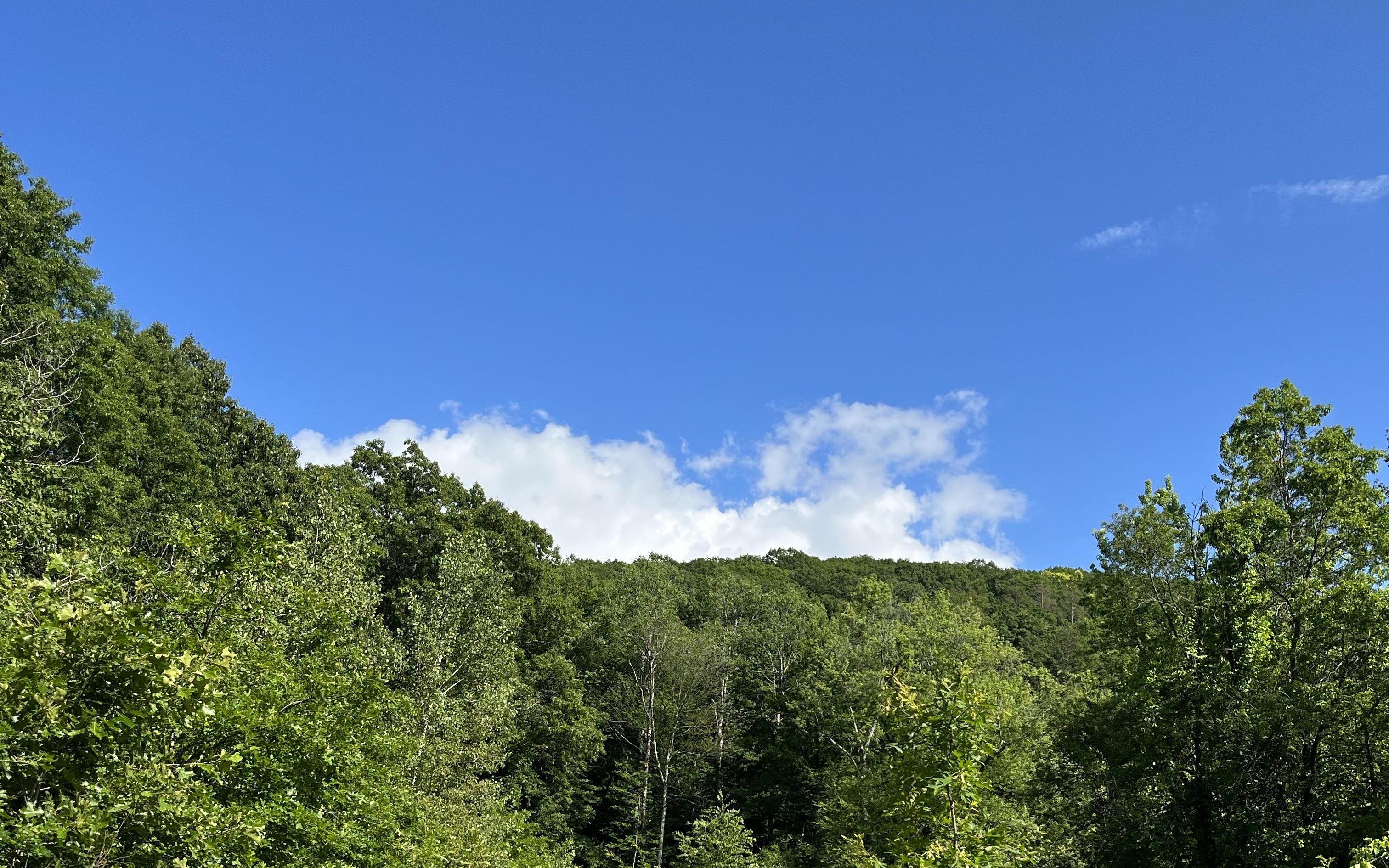
At the Mountain’s Edge, we seek to provide high quality care and education for the very young that respond to these times of social and climate crisis. We are especially interested in supporting children in seeing themselves as part of a larger ecosystem of humans, plants, animals, waters, and land. We want them to learn the wide range of skills they need to care for themselves (physically, spiritually, emotionally) and to care for others, human and more-than-human others.
Our approach is rooted in four beliefs about children and how they learn:
- Children are part of a larger ecosystem. They learn in relationship with all that is around them: their families, their peers, the natural world, and all that they see and experience in the society they live in. They are motivated to learn through these relationships, and their capacity to learn about something or someone directly relates to the quality of their relationship with that thing or other.
- All children are inherently intelligent and capable, no matter their abilities or life circumstance. It is the work of the teacher to help the unique intelligences and capabilities of each child thrive. We are rigorous in identifying individual needs, and helping families find additional support where needed, but we do not rely on labels to tell us about what a child can and cannot do.
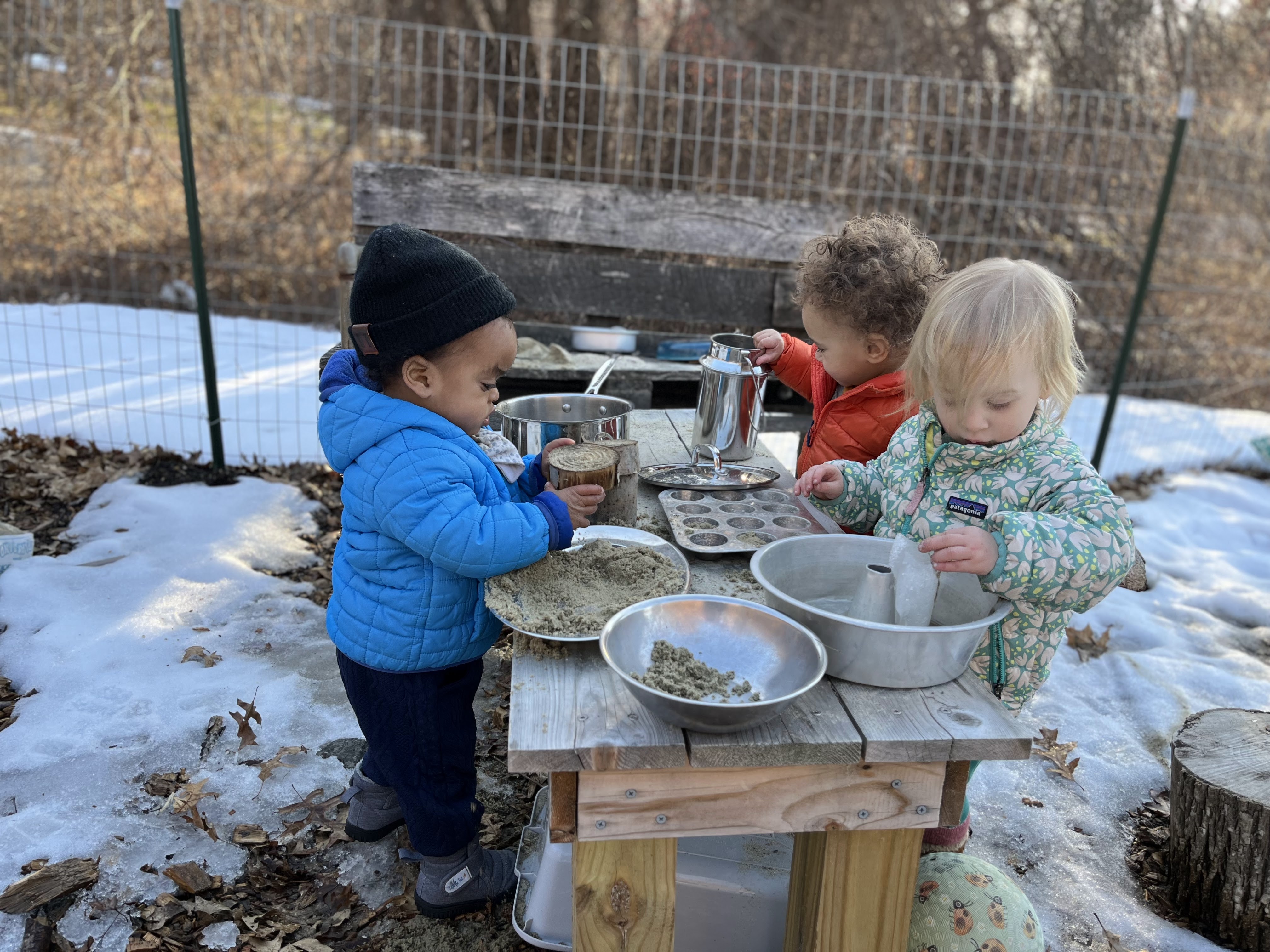
- Children make meaning through active engagement with the world – through open-ended play, through imagination, through meaningful work.
- Children learn best when they want to learn something; when they have frequent experiences of joy, enjoyment, and happiness; and also in the context of safe and loving relationships.
- Children come into the world curious, empathetic, compassionate, caring, and interested in others (the human and the more-than-human). These qualities need to be encouraged and practiced in order for them to grow. There are also many skills children must learn, like how to ask a friend to play, how to put on their shoes, how to navigate disagreement, how to read and write, and how to reflect on the world around them. Children need rich learning experiences and both direct and indirect support from others to learn these skills.
What Will Children Learn at the Mountain’s Edge?
Through dynamic play and direct engagement with the natural world, children are supported in all aspects of early learning: physical, cognitive, language and literacy, social and emotional. In addition, we emphasize:
- Building relationships of mutual care and respect, with other humans and the natural world: Friendship requires a whole range of relational skills, including: knowing how to ask someone to play, understanding how our actions impact one another, understanding how to step beyond our own experience and perspective and imagine what another may be experiencing, and knowing ways to stand up for another who is being mistreated.
- Working with and understanding our own and each others’ emotions and states of mind/heart: including joy, wonder, engagement, stillness, and quiet, as well as more difficult emotions such as sadness, anger, grief, frustration, etc.
- Cultivating our capacity to learn, ask questions, listen, and reflect: Children long to explore and make meaning of the world around them. The mountain, with its many creatures, offers a rich world for exploration and meaning-making. We give them many opportunities to cultivate their own capacity to learn. We encourage them to ask questions, and listen to and learn from the knowledge of others, including non-human others. We invite them to develop patience and the capacity to stick with challenging problems, giving them the foundation they need to learn in any context later in life.
- Collaborating with others: There is much focus on the development of the individual in our society. While we care about the individual development and accomplishments of children, in our program we are especially interested in supporting children in developing a sense of themselves as an essential part of a web of relationships, with the human and more-than-human world. We collaborate whenever possible, learning how to work together, how to work through difference and challenge, and how to enjoy shared work and play. This includes inviting children to explore what it means to collaborate with the plants and animals that live at the mountain’s edge.
We believe these four skills will support children in living meaningful and fulfilling lives. We, the teachers, seek to embody and model these qualities in our relationships with children, and to help children cultivate them in themselves.
*Lauren Elliott’s teaching philosophy is ever evolving and shaped by many. A few of her main influences are: Lev Vygotsky’s sociocultural theory, bell hooks’ critical pedagogy, Vivian Paley’s storytelling method and pedagogy of play, and the anti-oppression teaching practices and culturally relevant pedagogy of Lisa Delpit, Gloria Ladsing Billings, and many others. She is influenced by the Reggio Emilia Approach’s open view of the child, Maria Montessori’s belief in the child’s capabilities, and Emmi Pikler’s study of free movement in early development. She is also actively studying and practicing in her classroom the Anti Bias Education approach of Louise Derman-Sparks and others.
Outside of teaching pedagogy, some of her many teachers are: Soulmaking Dharma, Ursula K Le Guin and Octavia Butler, Bayo Akomolafe, the mountain, and her daughter.
 The Mountain's Edge: An Education for these Times